Gotland vs Jacob Wool for Yarn Spinning
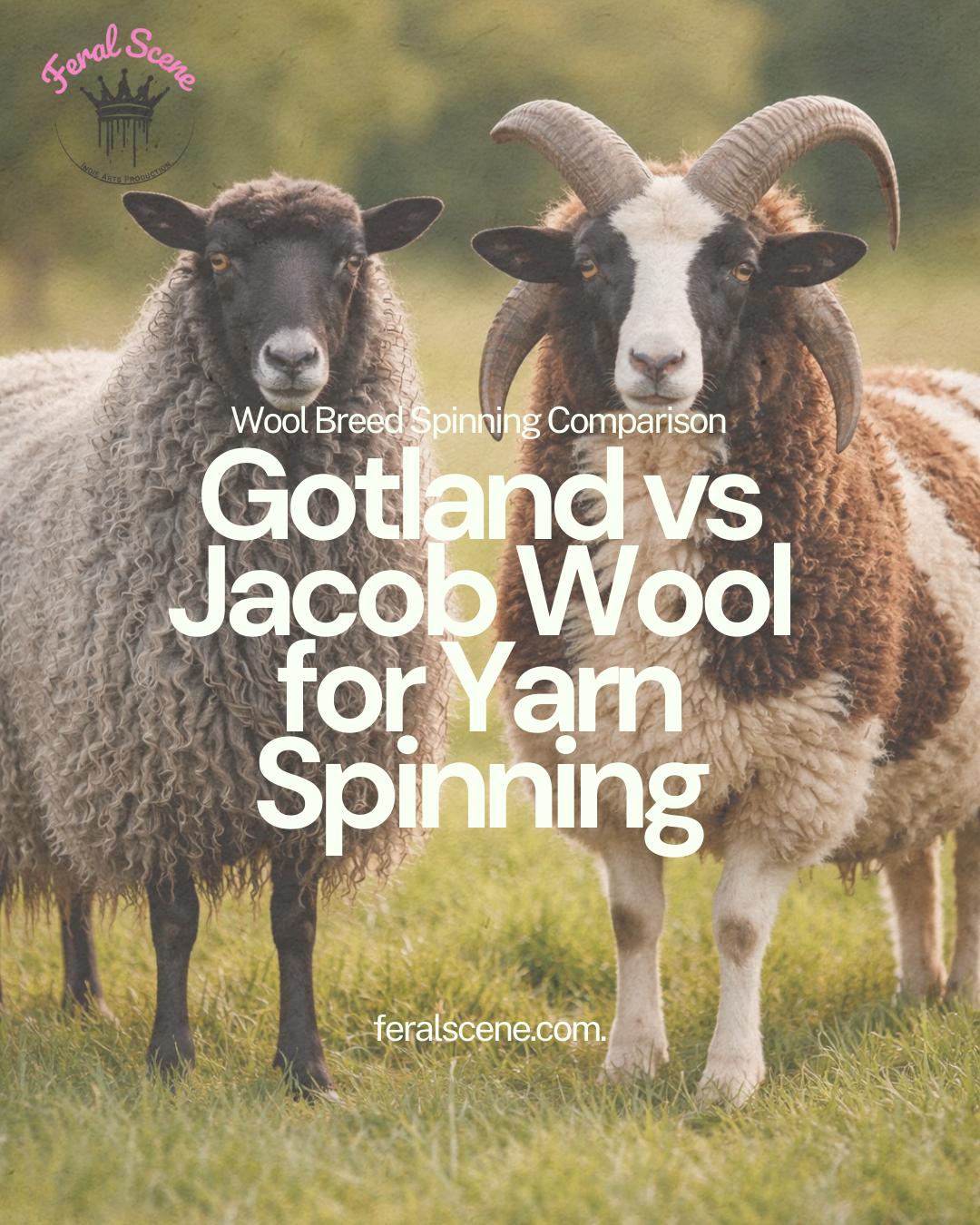
I’ve always loved the color of natural grey wool. It’s quiet, nuanced, and never flat, the kind of color that rewards looking twice. Recently, I found myself admiring two skeins that, at first glance, felt surprisingly similar: both naturally grey, both beautifully spun, both clearly made with care. But the longer I looked, the more their differences revealed themselves, especially in the way the yarn caught the light and how the fabric wanted to hang.
That contrast, subtle but unmistakable, is what led me back to Gotland and Jacob. Both are heritage breeds, and both produce stunning natural grey wool, but their shine, structure, and drape tell very different stories once you start working with them.
If you’re choosing between Gotland and Jacob, you’re basically deciding what kind of chaos you want in your life. Both are heritage breeds with strong personalities, and both show up frequently in handspun yarn. They just behave very differently on the wheel, for reasons that make a lot of sense once you understand where each fiber comes from.
If you’re choosing between Gotland and Jacob, you’re basically deciding what kind of chaos you want in your life. Both are heritage breeds with personality, but they behave very differently on the wheel.
Gotland Wool
Breed background
Gotland sheep originate from the island of Gotland off the coast of Sweden and descend from old Scandinavian landrace sheep that were present during the Viking era. Historically, these sheep were valued for pelts and durable outer textiles rather than next-to-skin softness. Cloaks, woven goods, and weather-resistant garments shaped the fleece over generations, favoring long, lustrous outer locks layered over a softer inner coat.
That history shows up immediately when you spin it. Gotland wool is refined, intentional, and visually striking, because it was bred to perform in harsh climates while still looking beautiful.
Vibe: Sleek, moody, Scandinavian art student
Staple & Structure
Gotland typically has a long to very long staple, often four to six inches or more. It is clearly dual-coated, with glossy outer locks and a softer inner down.
Handle & Spin
On the wheel, Gotland feels smooth and slightly slippery. It prefers a worsted or lock-based preparation and drafts cleanly when you respect the lock structure. Spinning Gotland tends to feel controlled and elegant rather than bouncy.
Yarn Results
The finished yarn is strong, lustrous, and fluid, with excellent drape and very little halo. The shine does most of the visual work.
Pros
Gotland produces yarn that looks expensive, even when spun simply. It excels in shawls, outerwear, and statement pieces where movement and drape matter.
Cons
It has less elasticity than springier breeds and can feel cool or firm next to skin if spun tightly.
Jacob Wool
Breed background
Jacob sheep are an ancient British heritage breed, with roots that likely predate Roman Britain. Their name comes from the biblical story of Jacob’s spotted and speckled sheep described in Genesis, a reference to their distinctive piebald coloring. Unlike breeds developed specifically for fine wool production, Jacobs were traditionally kept as hardy, multipurpose farm sheep valued for resilience rather than uniformity. Their frequent multi-horned genetics and highly variable fleeces reflect this history, resulting in wool that is diverse in texture and unmistakably rustic.
Vibe: Medieval goblin with opinions (in a good way)
Staple & Structure
Medium staple (typically 3–5 inches)
Very clearly dual-coated
Locks vary a lot across the fleece
Handle & Spin
More grab, more texture, more attitude
Prefers woolen or semi-woolen prep
Rewards patience and light hands
Yarn Results
Lofty, airy yarn with visible texture
Rustic, alive, and unapologetic
Excellent stitch definition when treated kindly
Pros
Warm and breathable
Great for sweaters, mittens, and heritage-style knits
Ideal if you like yarn that looks handmade
Cons
Needs sorting and prep to shine
Can feel rough if overtwisted or poorly blended
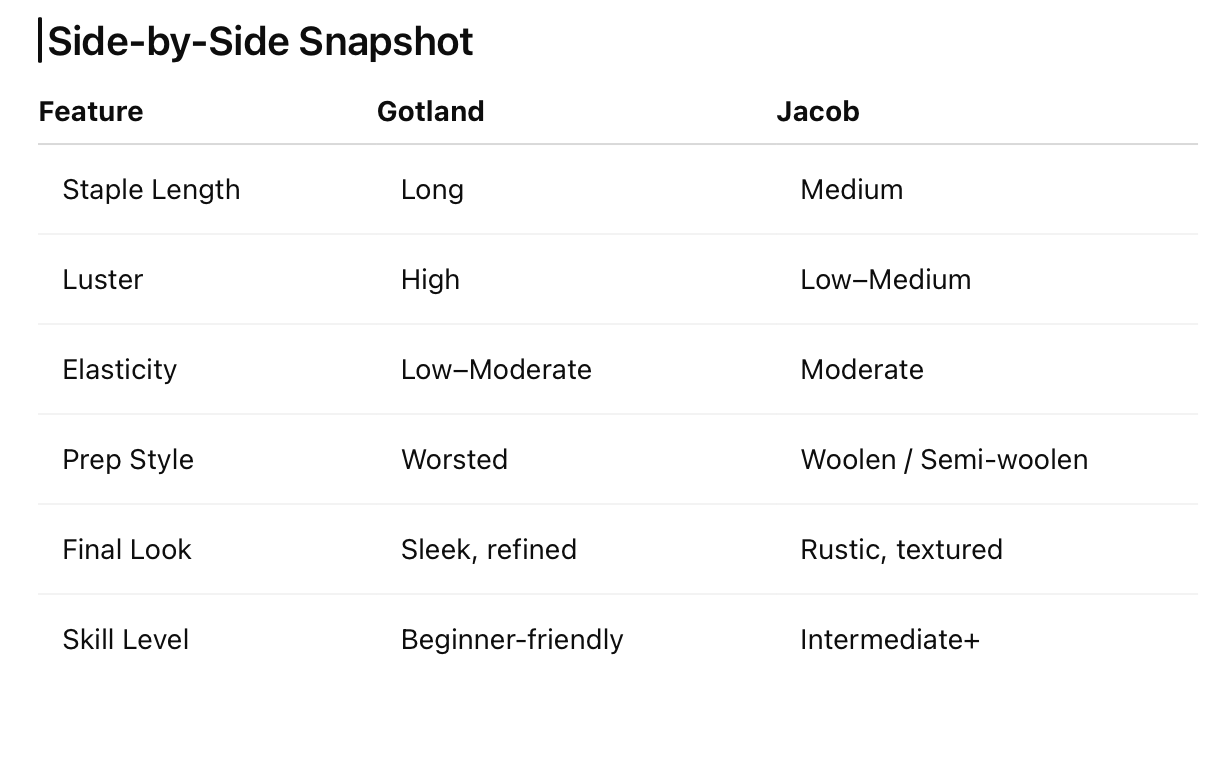
Side-by-Side Snapshot
FeatureGotlandJacobStaple LengthLongMediumLusterHighLow–MediumElasticityLow–ModerateModeratePrep StyleWorstedWoolen / Semi-woolenFinal LookSleek, refinedRustic, texturedSkill LevelBeginner-friendlyIntermediate+
So… which should you spin?
Choose Gotland if you want smooth drafting, visual drama, and yarn that behaves itself.
Choose Jacob if you enjoy process, texture, and yarn that feels like it came out of a historical reenactment tent.
Both are excellent. They’re just excellent at very different jobs.
If you want, we can also talk blending either of them with merino, alpaca, or silk to tame or amplify their personalities.
Why You’ll See Both at Feral Scene
Both Gotland and Jacob appear often in the Feral Scene Handspun Yarn Monthly Club. The club focuses on heritage fibers, thoughtful spinning, and supporting local spinners who understand material deeply.
Rotating through fibers like these allows members to experience how breed history, preparation, and technique shape finished yarn, while directly supporting spinners working at a small, intentional scale.
When you understand the story behind the fiber, spinning and knitting become more than just making something useful. They become a conversation between animal, spinner, and maker.
Welcome to The Hand Spun Yarn Club!
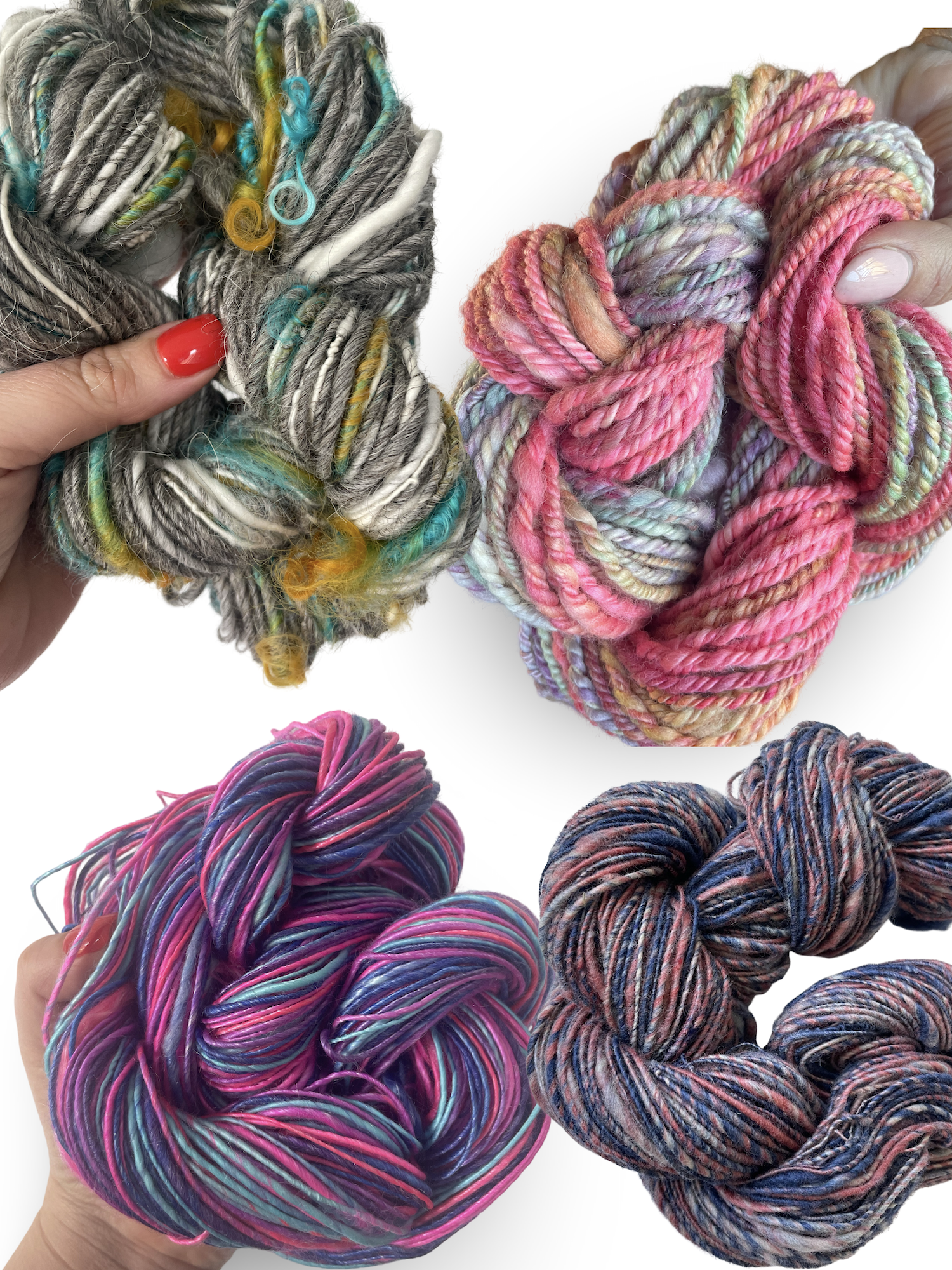
We’ve got some exciting news! Our Yarn Club has expanded, and it’s better than ever. It’s become a favorite for gifting – whether to a loved one or yourself – and we’ve taken your feedback to heart. You asked for a wider variety of colors and textures, and we’ve delivered!
Here’s the scoop:
Monthly Mystery Box: Sign up for our subscription and receive a delightful surprise in your mailbox every month. Each box includes 3-4oz of hand spun yarn, with yardage and gauge varying to highlight the unique qualities of each fiber. Perfect for knitters, crocheters, and weavers!
Simple Subscription: You’ll be billed once a month and receive your box shortly after. Enjoy total flexibility – you can cancel anytime without hassle. If you need to skip a month, just let us know within three days of the charge, and we’ll happily issue a refund.
Share Your Creations: We love seeing what you make with our yarn! Share your projects on Instagram or in our Facebook group, and connect with a community of fellow fiber arts enthusiasts.
All wool sourced from USA farms and mills, hand-spun by local artists, embodies the essence of American craftsmanship and sustainability.
Our curated selection celebrates the vibrant tapestry of regional differences, showcasing not just the rich texture of the wool but also the unique character and creativity of each artisan. When you choose our hand-spun wool, you're supporting small businesses and artists who pour their passion and skill into every strand. Experience the warmth and authenticity that comes from fibers crafted with love and care, and revel in the knowledge that your yarn choices are as local as they are luxurious.
Join the fun and add a touch of mystery to your crafting. Our Yarn Club is designed to inspire and excite – every single month.
Subscribe now and start your yarn adventure today!
We can’t wait to see what you create!