What to Knit With Hand-Dyed Yarn: How to Choose the Right Project for Speckled and Variegated Yarn
What you're going to make with it is a problem for Future You.
Eventually, of course, Future You finds herself standing in front of a very lovely yarn stash wondering: What should I actually knit with this?
Choosing a project for hand-dyed yarn can be surprisingly different from choosing one for a solid commercial yarn. Speckles, tonal variation and longer stretches of contrasting color all behave differently once they're transformed from a skein into knitted fabric.
Most importantly you need to think about what you want to make from the yarn not just how it looks in a skein.
Here's what I look at before deciding what a beautiful hand-dyed yarn wants to be.
1. Look at How the Color Is Actually Distributed
“Hand dyed” describes an enormous range of yarn.
A yarn with a predominantly solid base and tiny scattered speckles is going to behave very differently from a skein containing long stretches of turquoise, violet and navy—even if both technically fall under the enormous umbrella of variegated yarn.
Before choosing a pattern, untwist the skein and really look at it.
Are the contrasting colors tiny flecks?
Are there subtle tonal shifts within essentially one color?
Are there short bursts of several colors?
Or are there long sections of dramatically different colors?
The longer and more contrasting the color changes, the more likely they are to become a major design element in the finished fabric.
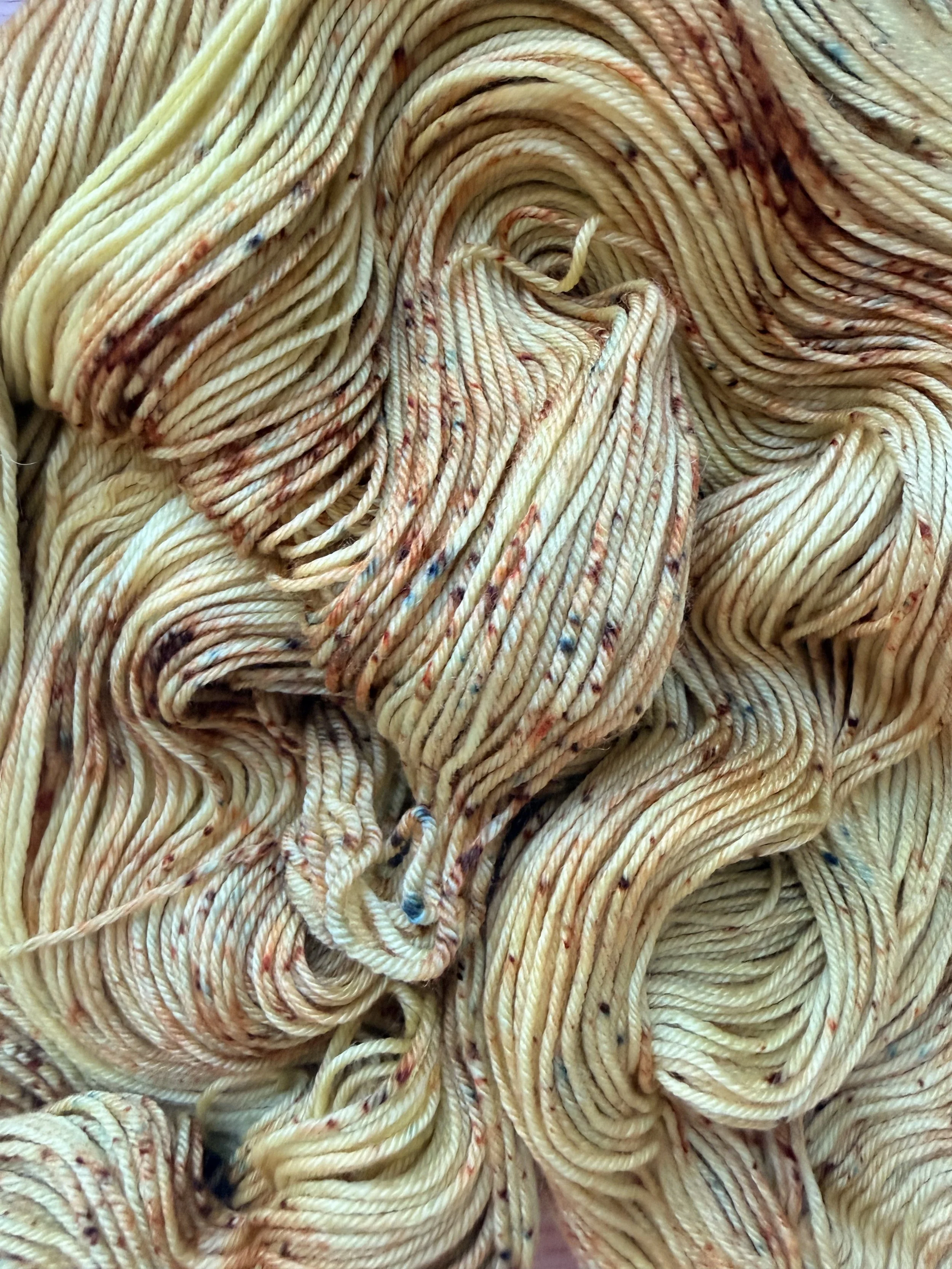
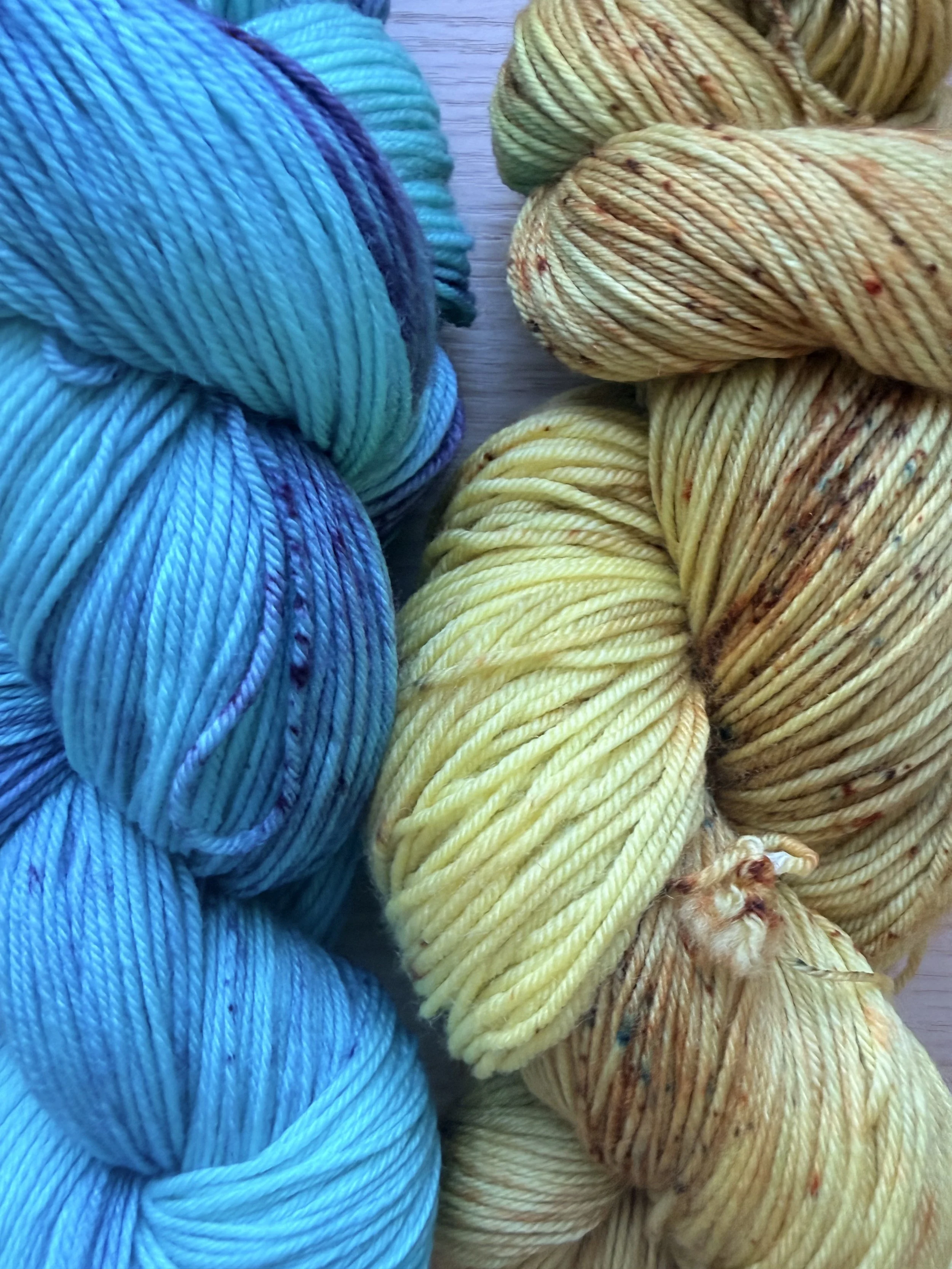
A softly speckled yellow, for example, may still read as predominantly yellow once knitted. The speckles become little moments of visual texture.
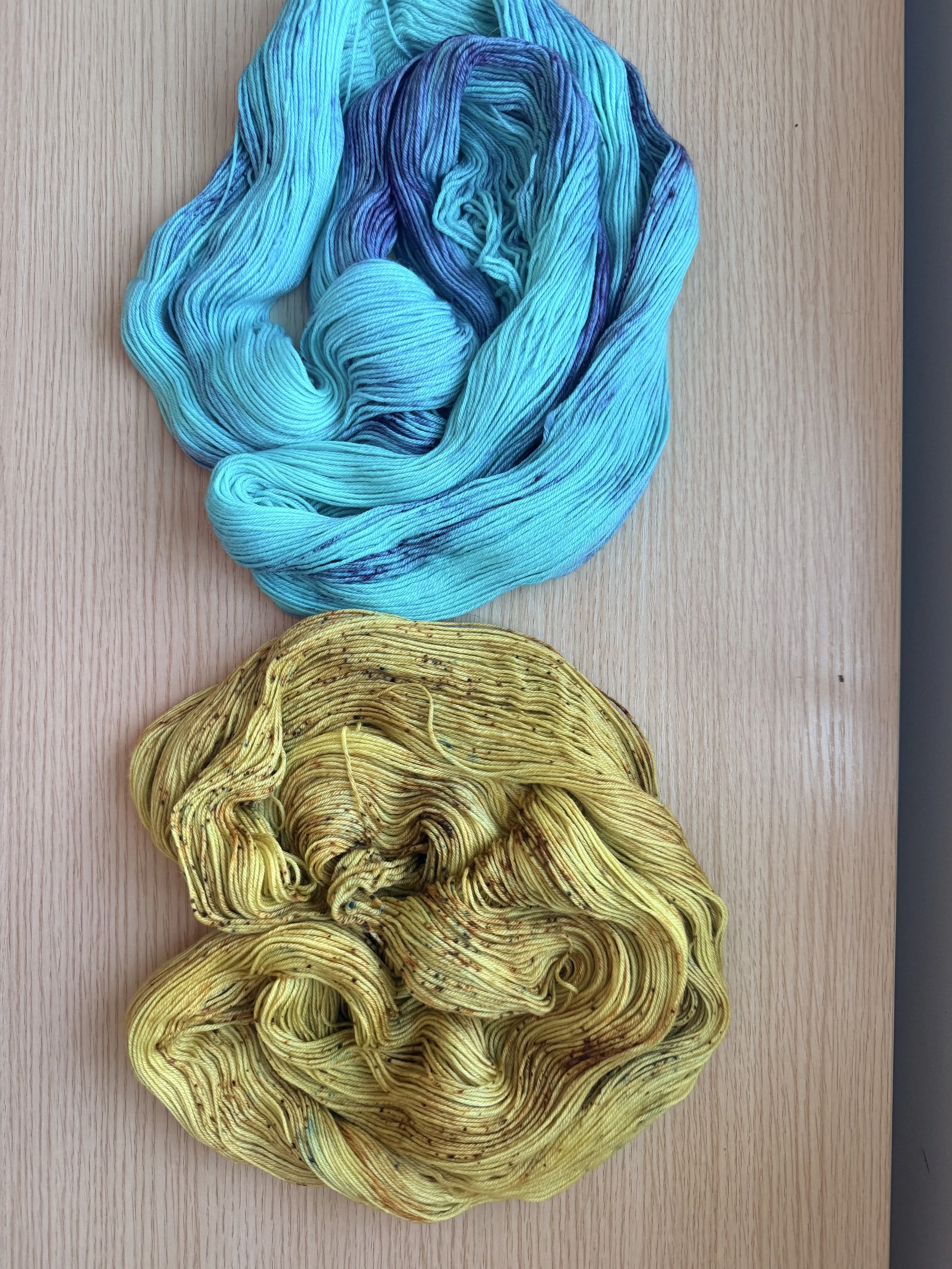
A turquoise yarn with substantial sections of deep purple is doing something else entirely. Depending on the size and construction of the project, those colors may create stripes, pools or flashes across the fabric.
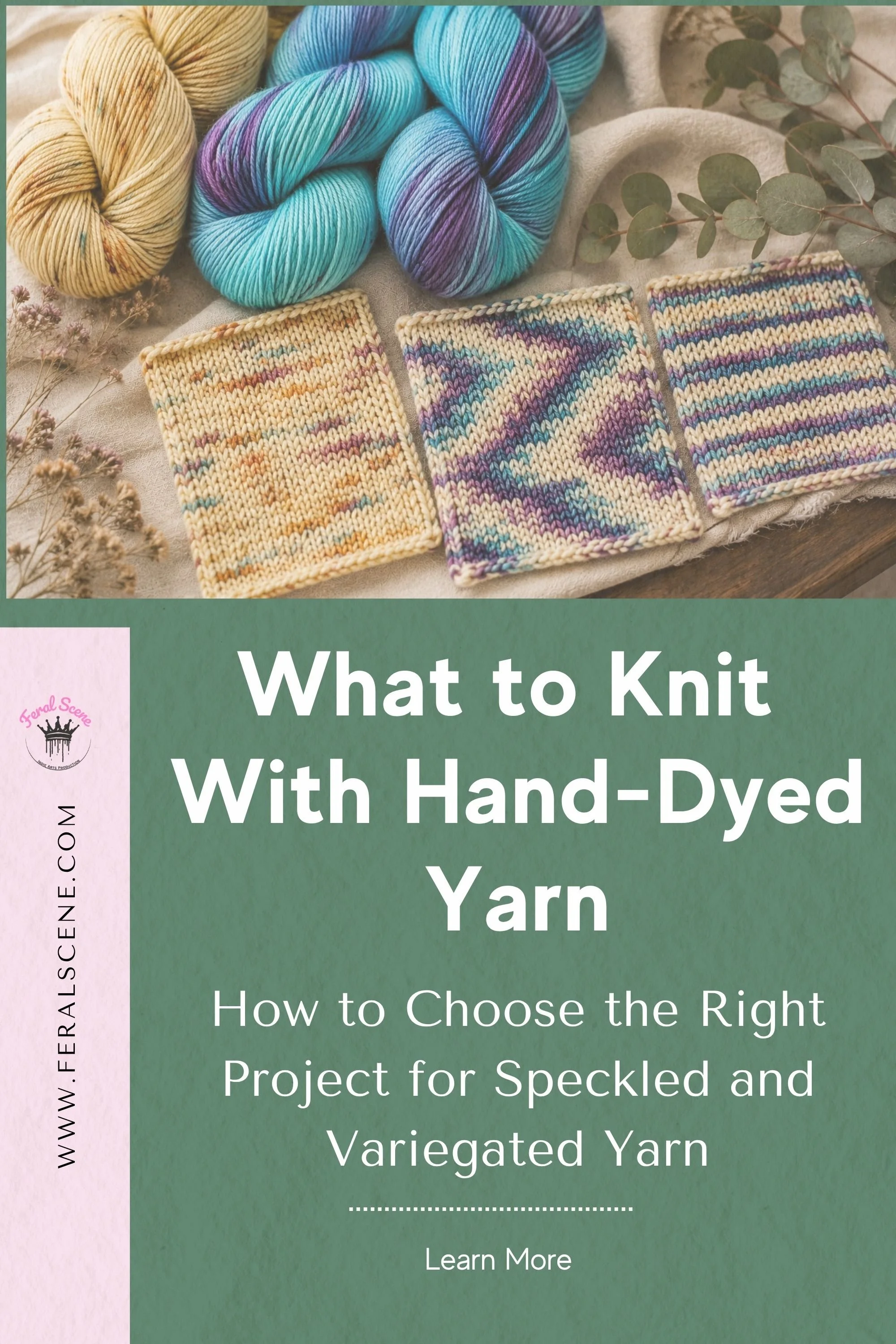
Neither is better. They simply need to be treated differently.
Quick answer: Choose simple stitches for highly variegated yarn, textured or intricate patterns for tonal yarn, and always swatch when color repeats may pool, flash or stripe.
What you're going to make with it is a problem for Future You.
Eventually, of course, Future You finds herself standing in front of a very lovely yarn stash wondering: What should I actually knit with this?
Choosing a project for hand-dyed yarn can be surprisingly different from choosing one for a solid commercial yarn. Speckles, tonal variation and longer stretches of contrasting color all behave differently once they're transformed from a skein into knitted fabric.
Most importatly you need to think about what you want to make from the yarn not just how it looks in a skien.
Here's what I look at before deciding what a beautiful hand-dyed yarn wants to be.
1. Look at How the Color Is Actually Distributed
“Hand dyed” describes an enormous range of yarn.
A yarn with a predominantly solid base and tiny scattered speckles is going to behave very differently from a skein containing long stretches of turquoise, violet and navy—even if both technically fall under the enormous umbrella of variegated yarn.
Before choosing a pattern, untwist the skein and really look at it.
Are the contrasting colors tiny flecks?
Are there subtle tonal shifts within essentially one color?
Are there short bursts of several colors?
Or are there long sections of dramatically different colors?
The longer and more contrasting the color changes, the more likely they are to become a major design element in the finished fabric.
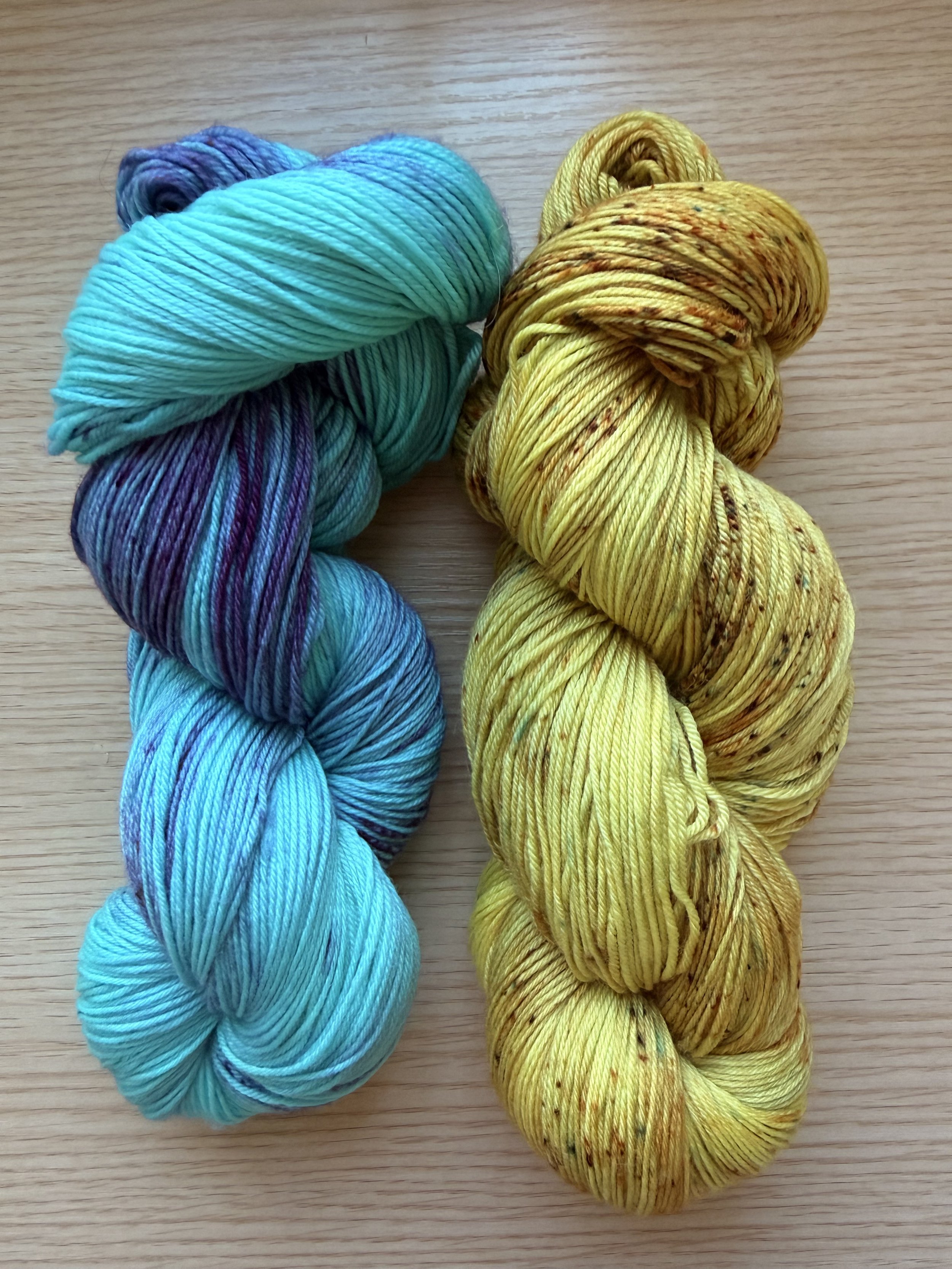
A softly speckled yellow, for example, may still read as predominantly yellow once knitted. The speckles become little moments of visual texture.
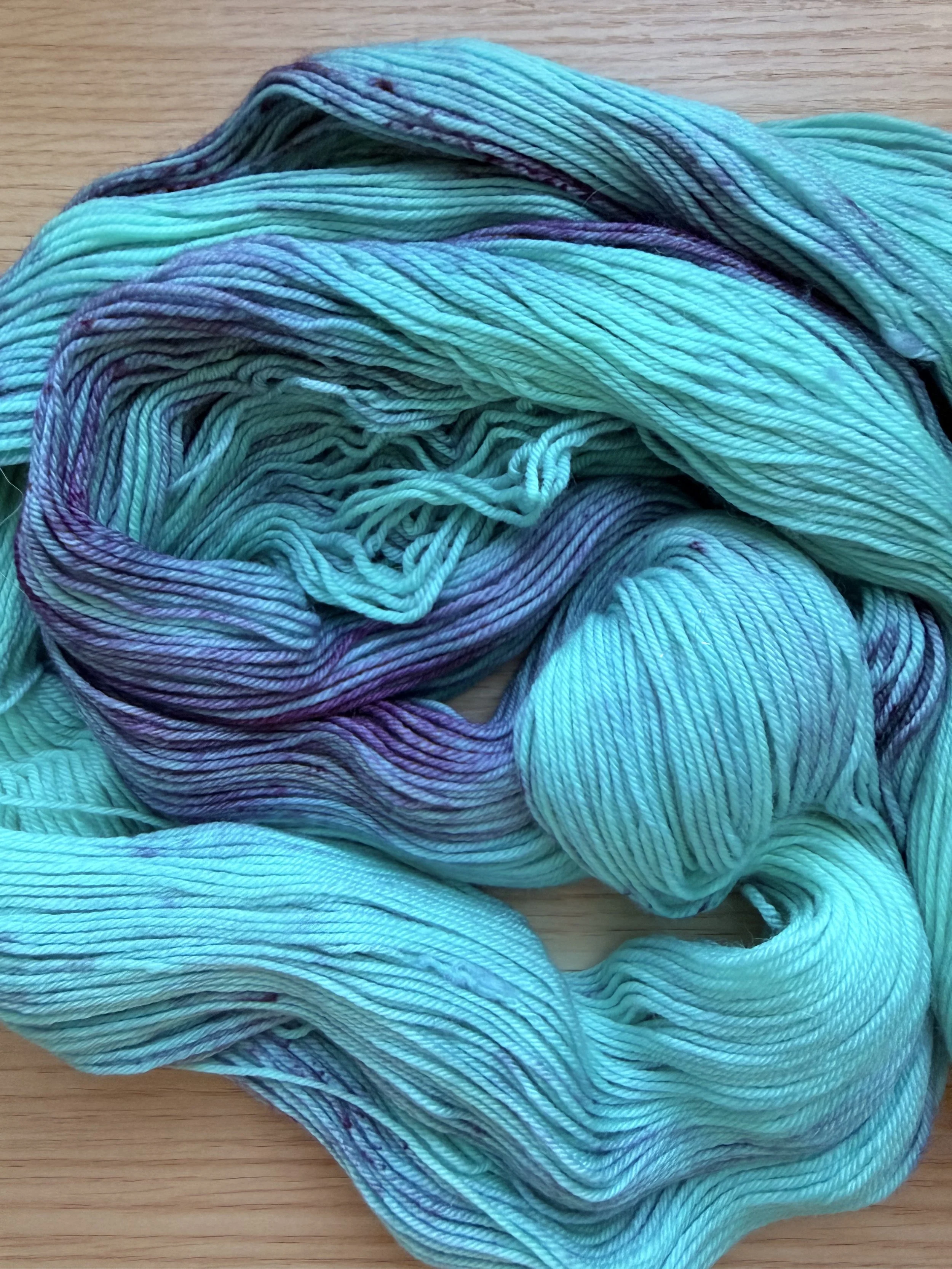
A turquoise yarn with substantial sections of deep purple is doing something else entirely. Depending on the size and construction of the project, those colors may create stripes, pools or flashes across the fabric.
Neither is better. They simply need to be treated differently.
2. Decide Who Gets to Be the Main Character: The Yarn or the Stitch Pattern
One of the easiest mistakes to make with an extraordinary skein is assuming it needs an equally extraordinary pattern.
Sometimes it needs exactly the opposite.
Simple stockinette can be one of the most beautiful ways to showcase hand-dyed yarn because there is nothing competing with the color. Every little speckle and tonal transition becomes visible.
Garter stitch can do something similar while introducing more physical texture and changing the way the colors visually interact.
This doesn't mean you can't use speckled or variegated yarn for lace, cables or heavily textured knitting. You absolutely can.
The question is whether you can still see the thing you worked so hard to create.
If you have an intricate cable motif and a yarn moving rapidly between several high-contrast colors, your eye may struggle to read either one. The cable hides the dye work while the dye work hides the cable.
As a general rule:
The more visually complicated the yarn, the more restrained I tend to be with the stitch pattern.
And the reverse works beautifully.
A subtle tonal or nearly solid hand-dyed yarn can be spectacular in elaborate cables or lace because those quiet shifts in color add dimension without overwhelming the construction.
3. Understand Pooling, Flashing and Striping
Here's where hand-dyed yarn becomes particularly interesting.
Color doesn't simply appear randomly once you start knitting.
The length of each colored section interacts with the number of stitches you're working, your gauge and the circumference or width of your project.
That means the exact same skein can behave completely differently in a sock, hat, scarf or sweater.
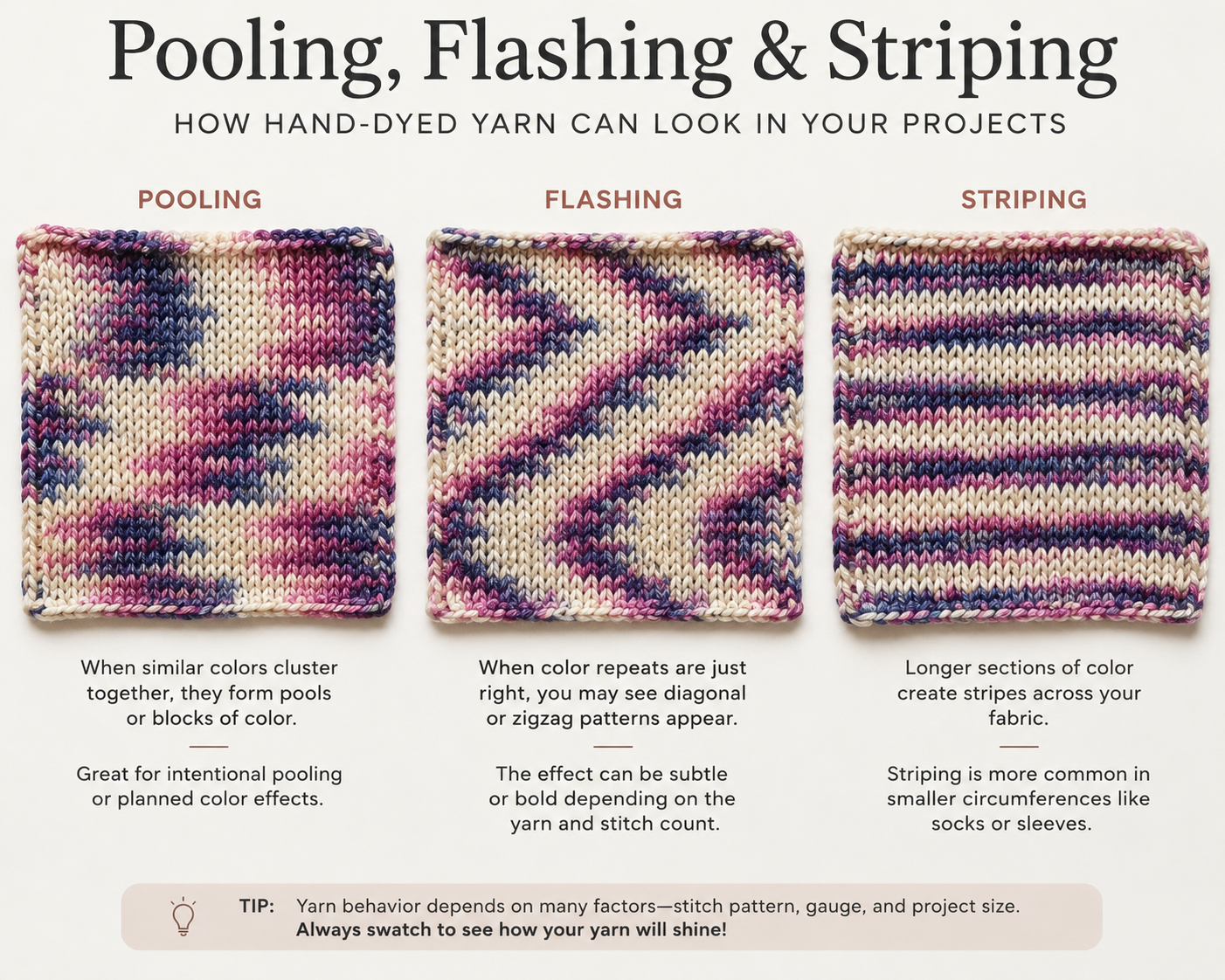
Pooling
Pooling happens when similar colors repeatedly land near one another, creating visible areas or “pools” of color.
Sometimes this is undesirable.
Sometimes it is absolutely gorgeous.
Flashing
Flashing occurs when colors begin forming repeated diagonal or zigzag-like movements across the fabric.
Again, it isn't necessarily a flaw. It's simply one possible result of the relationship between your yarn and your stitch count.
Striping
Longer stretches of color can begin creating recognizable stripes, particularly on projects with smaller circumferences.
And then there are speckles.
Small, scattered speckles tend to behave much more like visual confetti. Rather than forming large blocks of color, they appear intermittently throughout the fabric.
This unpredictability is part of what makes knitting with hand-dyed yarn so much fun.
You're participating in the design, but the yarn gets a say so too.
4. Think About the Size and Shape of Your Project
This is one of the reasons I don't love giving absolute rules about what a variegated yarn will do.
The project matters.
Imagine a section of purple appearing at regular intervals throughout a turquoise skein.
On a sock, you may encounter that purple again after relatively few stitches. It could begin creating a visible stripe or repeating pattern.
Across the body of an adult sweater, however, there are considerably more stitches in every round. Those same purple sections may become scattered much farther apart.
Change your needle size or gauge and you've changed the equation again.
This is why photos of a yarn in the skein can only tell you so much.
Which brings me to the least glamorous—and possibly most useful—piece of advice in this entire article.
5. Swatch the Expensive Yarn
I know.
You finally get the beautiful yarn and now someone is telling you to knit a square with it before you can get started on anything fun.
But hand-dyed yarn is one of the places where swatching becomes genuinely fascinating.
You're not only checking gauge. You're auditioning the yarn.
Try stockinette.
Try a little garter.
If you're considering cables or lace, work a small repeat.
Watch what happens to the colors.
A skein that looks incredibly busy while twisted may suddenly become beautifully balanced once knitted. Another that looks relatively quiet may reveal dramatic pools of color you couldn't see before.
If you're investing your money and dozens of hours of your life into a sweater, sacrificing a little time to learn what the yarn wants to do is worth it.
6. Should You Alternate Skeins of Hand-Dyed Yarn?
Possibly.
Even skeins dyed in the same colorway can have subtle differences. That's part of the beauty of small-batch and hand-dyed yarn.
Unfortunately, those differences can become much more obvious when you finish one skein halfway through a sweater and abruptly begin another.
Alternating skeins—working a few rows or rounds from one skein and then switching to the other—helps distribute those differences throughout the project.
It's particularly worth considering for larger garments where an abrupt change would be noticeable.
But I don't think variation always needs to be “fixed.”
Sometimes the slight shift between skeins contributes to the character of a handmade piece. You can even use the transition intentionally.
The important thing is knowing that the variation exists before you've knitted 80 percent of a sweater.
7. Match the Pattern to the Personality of the Yarn
If you're staring at your stash trying to decide what something wants to become, this is the shorthand I'd use.
Lightly Speckled Yarn
Try stockinette, garter, simple texture, uncomplicated lace and even cables when the underlying color is relatively consistent.
These yarns can often be treated almost like tonal yarns, with the speckles providing an additional layer of interest.
Tonal Hand-Dyed Yarn
This is your playground.
Cables, lace, texture and simple stitches can all work beautifully because the subtle shifts within one color family add dimension without dramatically interrupting the pattern.
Highly Variegated Yarn
Let it breathe.
Stockinette, garter and relatively simple silhouettes allow dramatic color changes to become part of the design rather than competing with it.
I hope these tips and this structure helps you to choose a project that you’ll love with that fancy yarn in your stash. I feel like when in doubt with hand dyed yarn you can alway make some cool socks or slippers! That’s probably just that those are my go to’s.
If you love hand dyed yarn and love supporting small businesses then check out my hand dyed yarn of the month club which highlights the work of different fiber artist and yarn bases.

Here it is the yarn subscription we’ve been dreaming up and putting together for what seems like forever! I’ve been wanting to make a sister yarn subscription to go with our super popular braid club. So it has all of the same elements that has made our hand dyed braid club such a hit
Same Fabulous team of dye artist
Small Mill & USA Farm supporting yarn bases
Wide range of colorways changing it up from shipment to shipment from vivid and bold to subtle and gorgeous so there’s always something new to try and a fun way to push your own creativity.
We will continue to add 1 skein projects to our free pattern page for inspiration of what to make with your yarn without having to buy more.
Limited edition colorways , be the envy of your yarn hoarding friends
Each month you will receive 1 skein of yarn that will be planned out and hand dyed by the Dye team. You can count on us to not just make lovely yarn and deliver it to your door. We also source our materials and artists from small farms and family businesses with a focus on staying stateside. We hope this subscription will have the same group community and following that our braid club has enjoyed with everyone showing off their projects and sharing the inspiration.