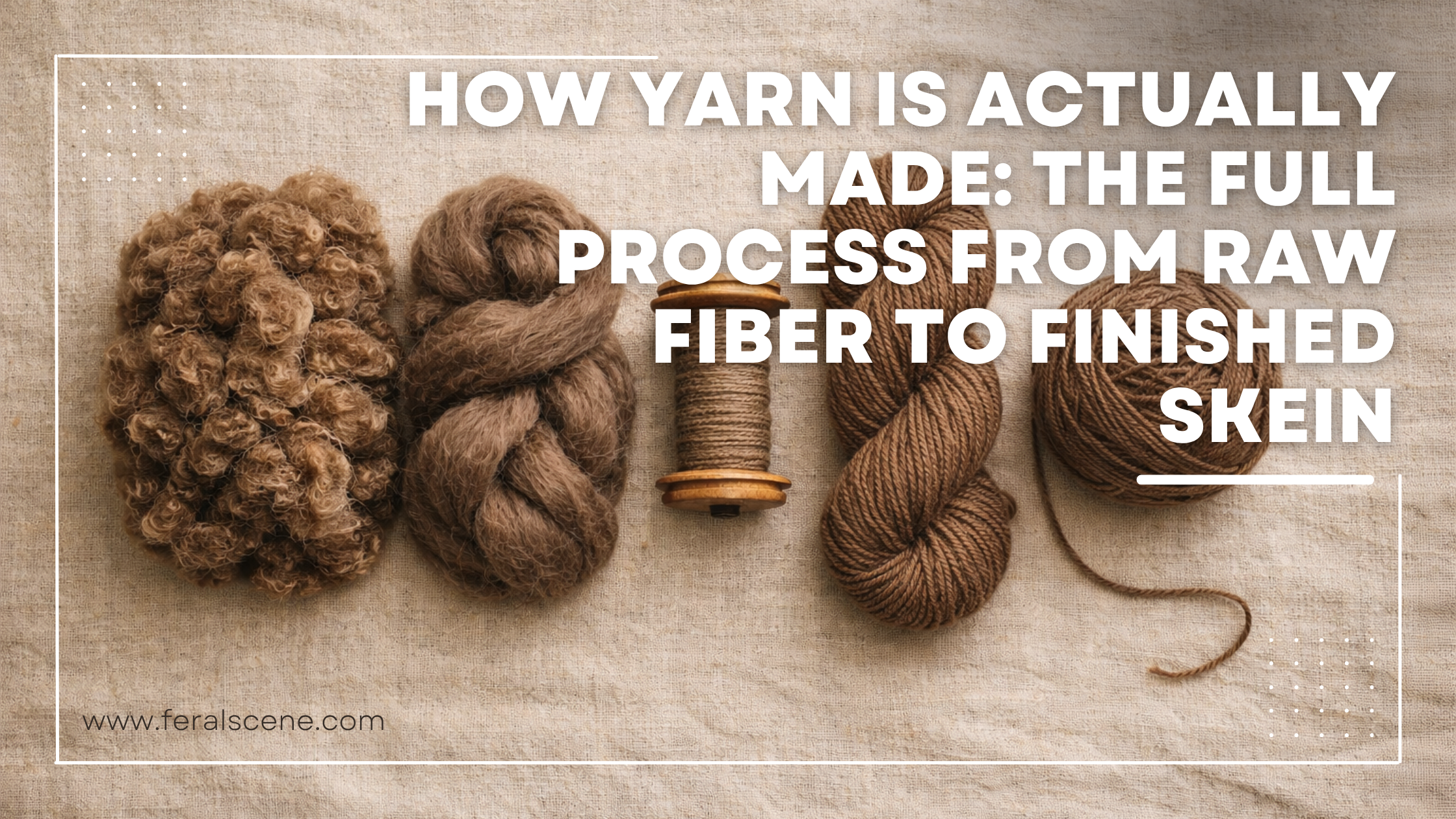
Learn the yarn spinning process
Most knitters and weavers have touched hundreds of skeins of yarn without ever knowing what happened before the label was tied. Spinning changes that — and once you understand the process, you can’t unsee it.*
There’s a particular kind of wool I keep coming back to , a Corriedale roving, soft and fluffy, the kind that drafts easily and makes for an enjoyable spin. The first time I spun it into yarn, I held the finished skein and realized I understood it differently than I ever had when I bought it off a shelf. I knew what had happened to get it there. Every decision — the prep, the twist, the ply — was now legible to me.
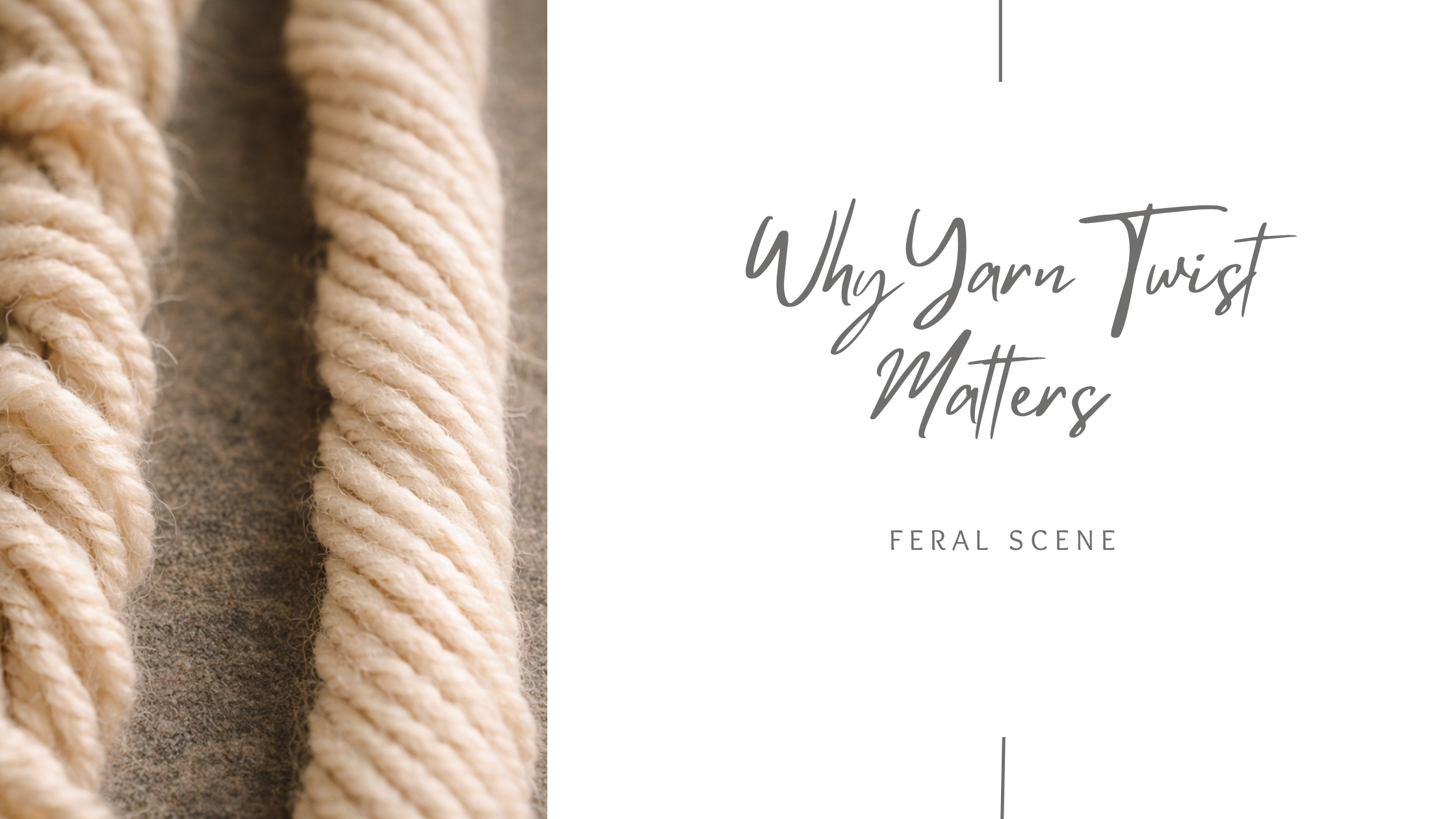
Over vs under twist in hand spun yarn
That’s what the fiber-to-yarn process does. It doesn’t just teach you to spin. It teaches you to “read” yarn.
This post walks through every stage of how yarn is made, from raw fleece to finished skein — whether you’re a knitter who’s curious about the process, someone considering learning to spin, or a maker who wants to understand the material you work with at a deeper level.
What Is Yarn, Really?
Before we get into the steps, it helps to strip away some assumptions.
Yarn isn’t just “fiber that’s been twisted.” It’s a deliberately engineered structure — a series of intentional decisions about fiber preparation, twist angle, ply construction, and finishing. Every skein you’ve ever bought reflects those choices, whether the maker was a small-batch indie dyer working with hand spun singles or a large-scale mill producing worsted weight at volume.
The difference between yarn that pills, splits, or dies after one project and yarn that ages beautifully? Almost always traceable to one of the stages below.
Stage 1: Raw Fiber
Every yarn starts with a fiber source — and the choices made at this stage shape everything downstream.
For wool, this means the specific breed of sheep matters enormously. A Merino fleece, with its fine micron count and tight crimp, will behave completely differently than a Bluefaced Leicester with its long, lustrous staple. Fiber prep for each will be different. The final yarn’s drape, warmth, and durability will be different.
What spinners learn here:
- Staple length — how long the individual fibers are, which determines whether you prep them for a woolen or worsted draw
- Crimp — the natural wave pattern in the fiber, which affects how much air and loft the finished yarn will hold
- Micron count — a measure of fiber fineness that predicts softness against skin
- Fiber blends — why wool is often blended with silk, alpaca, nylon, or other fibers, and what each adds
Most knitters know they prefer “soft” or “durable” yarn. Spinners know *why* a yarn is those things — and can reverse-engineer it.
Stage 2: Preparing the Fiber (Drafting Prep)
Raw fleece doesn’t go directly onto a wheel. It gets prepared first — and the method of preparation is one of the most consequential decisions in the whole process.
There are two primary prep methods:
Carding produces a light, airy arrangement of fibers that face in multiple directions. It creates a *woolen* preparation — think fluffy rolags or batts. Yarn spun from carded fiber tends to be lofty, warm, and slightly fuzzy.
Combing produces a smooth, parallel arrangement where short fibers are removed entirely, leaving only the longest, most uniform ones. This creates a *worsted* preparation — top or roving. Yarn spun from combed fiber is denser, smoother, and has a subtle sheen.
The same raw fleece, prepped two different ways, will produce two entirely different yarns. This is why a handspinner can pick up a commercial roving and immediately recognize it as combed top — or why a batt from an indie dyer produces that distinctive halo in a finished knit.
Stage 3: Spinning Singles
This is where fiber becomes yarn — at least the beginning of it.
A “single” is one strand of spun fiber. It’s the foundational unit. Spinning a single means drawing out the prepared fiber (drafting) while adding twist to lock the fibers together into a coherent strand.
This is also where the most variables live:
Twist angle determines how firm or soft the yarn will be
Drafting technique (long draw vs. short draw) affects texture and consistency
Wheel ratio controls how much twist enters the fiber per treadle
Twist balance is one of the most important concepts in spinning, and one of the least understood from the outside. An under-twisted single will be weak and prone to separating. An over-twisted single will kink and fight you. A balanced single holds its structure — and that balance is what separates handspun that knits beautifully from handspun that frustrates.
When knitters ask why their yarn “feels different” from commercial yarn, this is usually part of the answer. Commercial spinning is automated for extreme consistency. Handspun carries the subtle variation of human hands — a quality that produces its own kind of beauty in finished fabric.
Stage 4: Plying
Most yarn isn’t a single. It’s plied — two or more singles twisted together in the *opposite* direction from which they were spun.
This counterintuitive step does several things at once:
- It balances the twist, so the yarn lies flat instead of spiraling
- It creates structural integrity, making the yarn more durable and resistant to abrasion
- It changes the aesthetic*, producing the rounded, rope-like profile of classic worsted weight yarn
The number of plies changes the character of the yarn significantly. A 2-ply has a subtle, clean structure. A 3-ply is rounder and more defined. Cables and specialty constructions can go higher. Singles yarn — spun carefully enough to be balanced on its own — has a different kind of drape entirely.
This is also the stage where many of the textural differences between yarn brands and indie dyers become visible. Tight plying produces firm, bouncy yarn. Loose plying produces something softer and more drapey.
Stage 5: Finishing — Setting the Twist
A freshly plied skein isn’t finished yet. It needs to be washed and set.
Setting the twist involves wetting the yarn and allowing it to dry under gentle tension. This relaxes the fibers, locks the ply structure in place, and transforms what might look like a chaotic, kinky strand into a smooth, even skein.
This step also:
- Blooms the fiber, enhancing softness and loft
- Evens out slight inconsistencies in the spinning
- Reveals the true hand of the finished yarn

Learn about how yarn is spun structurally
It’s the difference between a skein that looks finished and one that looks handmade in the best possible way. Watching yarn transform through this final stage is one of the more satisfying moments in the whole process.
What Understanding This Process Actually Changes
Here’s what I’ve noticed, after years of spinning and teaching: knitters and weavers who understand the fiber-to-yarn process shop differently, knit differently, and troubleshoot differently.
They pick up a skein and notice the ply structure. They can feel the difference between a woolen and worsted preparation. When their knitting doesn’t behave the way they expected, they know where to look. They understand why a yarn from a small indie dyer with handspun singles creates a different finished fabric than a commercial mill yarn — and they can choose intentionally between the two.
Spinning doesn’t just teach you to make yarn. It teaches you to understand the material you’ve been working with all along.
Ready to Go Deeper?
The Dream Yarn Course walks through every stage of this process — from selecting and preparing fiber to spinning balanced singles, plying, and finishing a skein you’re genuinely proud of. It’s built for makers who want to understand yarn from the inside out, whether or not spinning becomes a regular practice.
If this post opened something up for you, the course is the next step.

click here to learn more about spinning your own yarn step by step
Try spinning with my most varied fiber club!
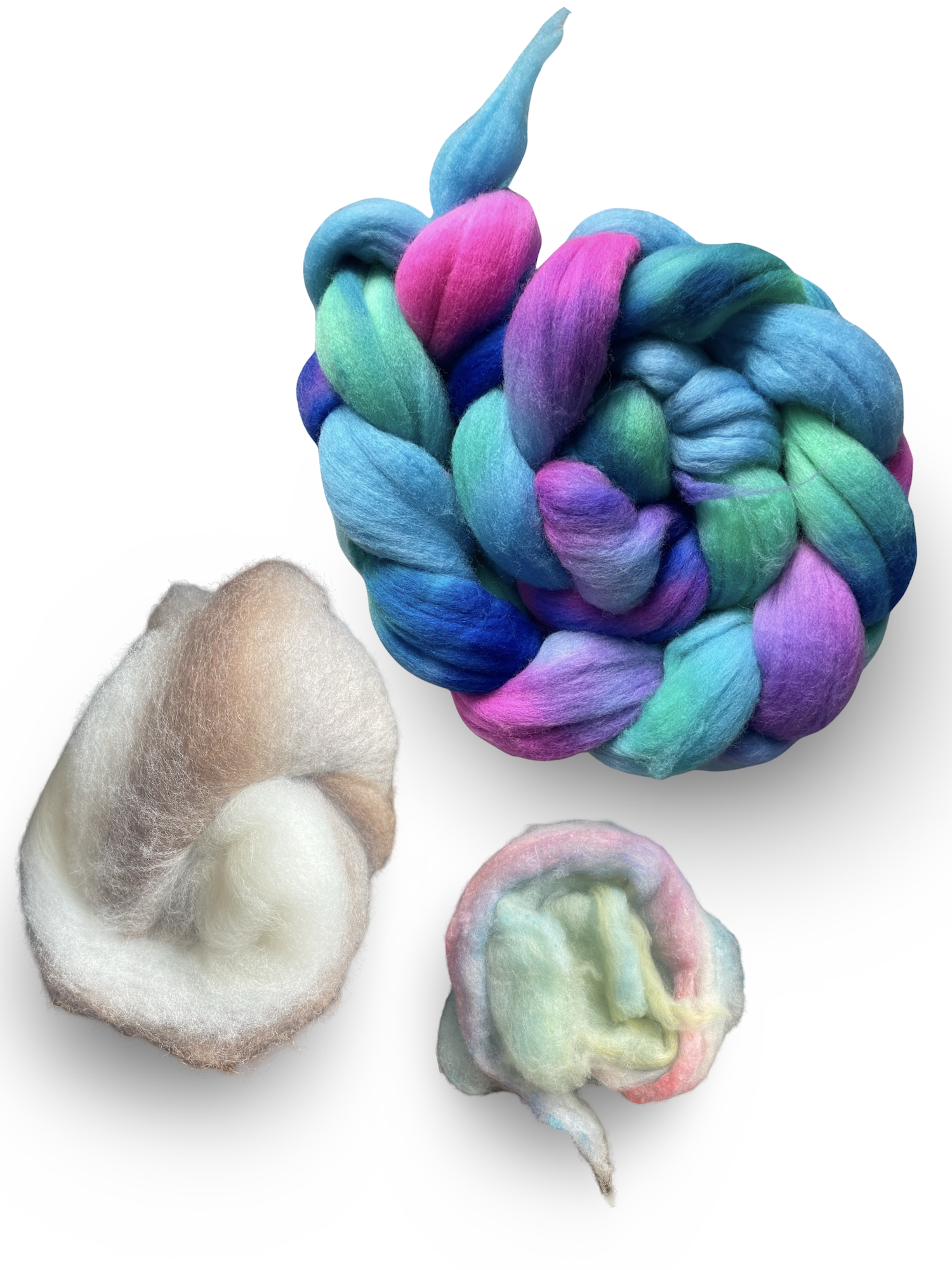
Our team of fiber artists and our small farm friends are thrilled to introduce the Monthly Spinning Fiber Subscription, crafted with an eye for design. This special package, which I originally created for personal friends and fellow fiber enthusiasts, is now available to you!
Here’s what you’ll receive each month:
4 oz Hand-Dyed Braid: Hand-dyed by our talented dye team, featuring our classic soft merino/rambouillet blend from a historic mill in the USA.
2 oz Mixed Fiber Batt: Made from unique and natural fibers, including selections from small USA farms like those in our Natural Beauty Bundle.
1 oz Batt or Rolag: Created from luxury fibers, hand-dyed and blended by our skilled fiber artists.
Our most loved spinning fiber subscription. A little bit of everything!
Great for gifting.
Totaling 7 oz of premium spinning fiber, this subscription is designed to inspire your creativity every month.
The spinning fiber subscriptions will be sent out around mid-month, ensuring you have a regular supply of beautiful fibers to work with.
Join our community and elevate your spinning projects with our hand-picked, high-quality fibers!