Best Wool for Spinning: Rambouillet, Merino & Corriedale Compared
After making a recent comparison video of these braids ( linked below) I felt the need to jot down some comparisons for notes. Here you go!
How These Fibers Actually Behave at the Wheel
Not all wool is created equal — and if you’ve ever wondered why certain fibers draft effortlessly while others feel fussy, grabby, or inconsistent, the answer almost always lives in the fiber itself.
In this comparison, we’re looking at Rambouillet, Merino, and Corriedale wool braids side by side, focusing on how they perform in real spinning conditions — not just how they’re described on paper. Micron counts and breed reputations only tell part of the story. What matters most is how a fiber behaves in your hands.
This breakdown is designed to help you choose fiber with intention instead of guesswork.
What Actually Matters When Comparing Wool for Spinning
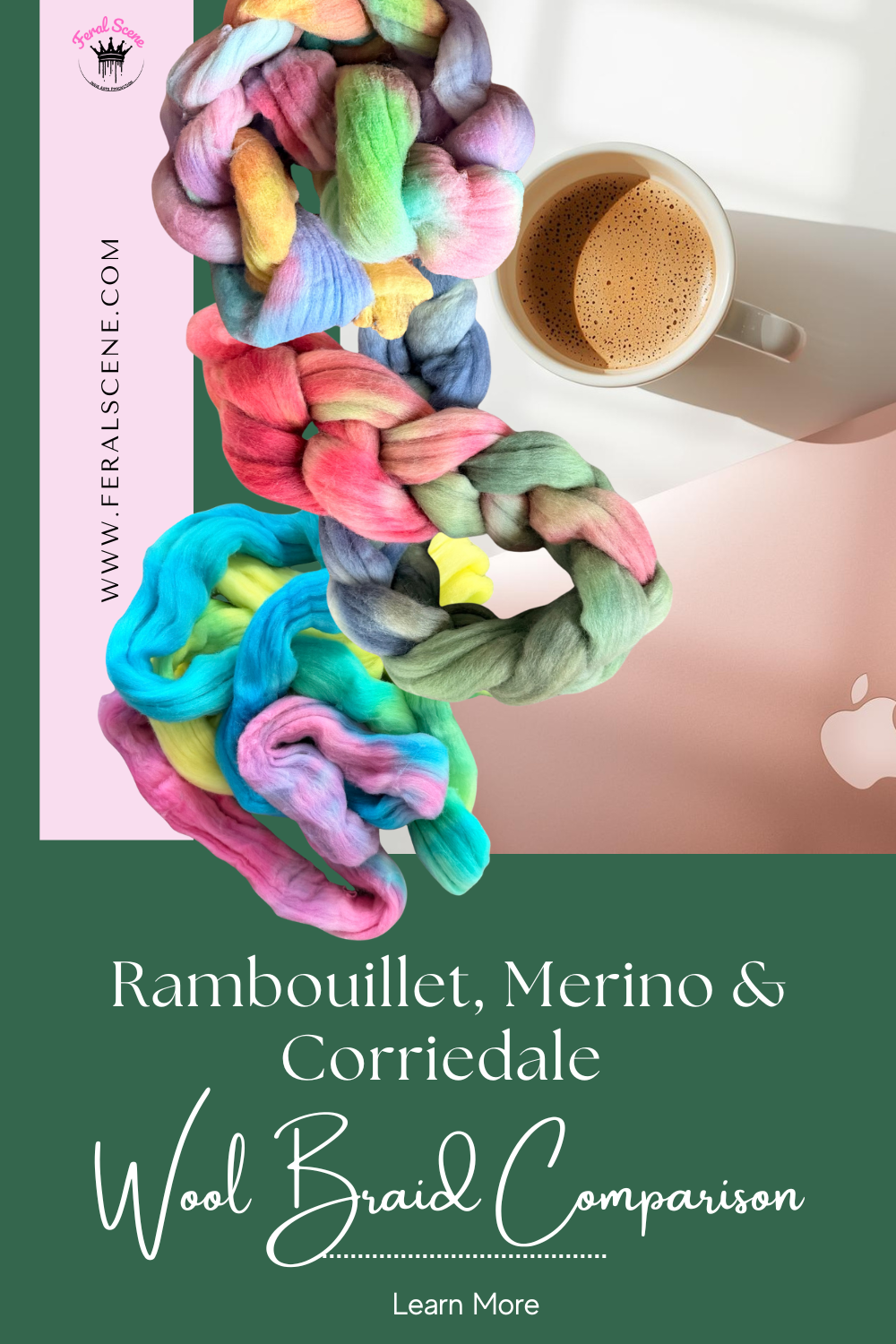
compare rambouillet , merino , corriedale wool
Before diving into each fiber, it helps to understand what affects spinning experience the most:
Staple length – how long the individual fibers are
Crimp – the wave or elasticity of the fiber
Fiber alignment – how neatly the fibers lie together in a braid
Grip vs. glide – how the fibers hold each other during drafting
Bounce vs. structure – softness alone isn’t the goal
Different combinations of these traits create very different spinning experiences.
Rambouillet Wool
Balanced, Forgiving, and Quietly Luxurious
Rambouillet is often described as a sturdier cousin to Merino, but that undersells its elegance. It offers softness with structure — a balance that many spinners don’t realize they’re looking for until they feel it.
What you’ll notice when spinning Rambouillet:
Medium-long staple with consistent crimp
Smooth, controlled drafting
Fibers stay together without feeling sticky
Easy to maintain even twist
Why spinners love it:
Rambouillet gives you time. It drafts evenly without collapsing or rushing into twist, making it an excellent choice for learning fiber control or refining technique.
Best uses:
Everyday garments
Shawls and sweaters
Heirloom pieces that need softness and longevity
Merino Wool
Soft, Elastic, and Demanding of Technique
Merino is famous for its softness, but softness comes with trade-offs. High crimp and fine micron fibers create elasticity that can either feel dreamy or frustrating, depending on your experience level.
What you’ll notice when spinning Merino:
Sometimes shorter staple length
High crimp and elasticity
Strong fiber grip
Can draft quickly and unexpectedly
Why it can feel tricky:
Merino likes to grab itself. Without consistent drafting rhythm, it can compact or slingshot twist into the fiber, especially for beginners.
Best uses:
Next-to-skin garments
Baby items
Lightweight accessories where softness is the priority
Corriedale Wool
Structured, Stable, and Beginner-Friendly
Corriedale is often recommended for beginners for good reason. It’s cooperative, predictable, and incredibly versatile without feeling dull or coarse.
What you’ll notice when spinning Corriedale:
Longer staple length
Moderate crimp
Clear drafting zone
Strong yarn formation
Why it’s so reliable:
Corriedale doesn’t rush. It gives clear feedback through your hands and holds together well during drafting, making it excellent for building confidence.
Best uses:
Accessories and outerwear
Durable garments
Practice spinning and sampling
Choosing the Right Fiber for Your Project
Instead of asking “Which wool is best?”, ask:
Do I want ease or elasticity?
Am I prioritizing softness or durability?
Is this for learning, refining, or producing yarn?
Matching fiber to purpose is what transforms spinning from trial-and-error into a skillful, satisfying process.
Spin with Clarity, Not Guesswork
Understanding why fibers behave the way they do changes everything. When you choose wool with intention, spinning becomes calmer, faster, and far more rewarding.
If you want to learn spinning as a system — understanding fiber before you ever sit down at the wheel — this comparison is a strong foundation.
Helpful links:
Fiber braids and spinning resources: https://feralscene.com
Learn to spin with structure (Dream Yarn): https://feralscene.com/landing-dream-yarn
Get some small farm braids of your own with my monthly fiber clubs

Do indie dyed braids make your heart skip a beat, they’re so fluffy and full of possibilities…. Then this is the monthly subscription for you. Every month I’ll be designing a custom color way just for that month so it will be seasonally appropriate and on trend.
We’re so proud of our hand-dyed braids. I wanted the perfect easy to use and inspiring fiber option for beginners and advanced spinners alike. Roving braids are very popular for a reason. We wanted braids that would live up to our standards here of supporting small farms and mills. These braids are from a small USA Farms and Mills with Ethical treatment of the Sheep. You will be billed once a month and will receive your box later that same month.
4oz braid
USA Sheep and Mills
Hand Dyed in Small batches by our dye team
fun monthly limited edition colorways
Wool is super soft Merino ,Ramboullet, Shaniko, Targhee or similar breeds between 19-23 Mircons. We are very picky on our fiber quaintly both for being ethically & locally sourced but also for superior softness and spinablility.
This is a monthly subscription that you can cancel at anytime. If you receive and charge and would prefer not to receive a box that month as long as you let us know with in 3 days of the charge we will even issue your refund for the same month. We really want this to be fun and enjoyable for everyone.
Please share your creations with us on facebook in the hand spun yarn love group and instagram tagged #craftyhousewifeyarns or #feralscene
Join the fun.
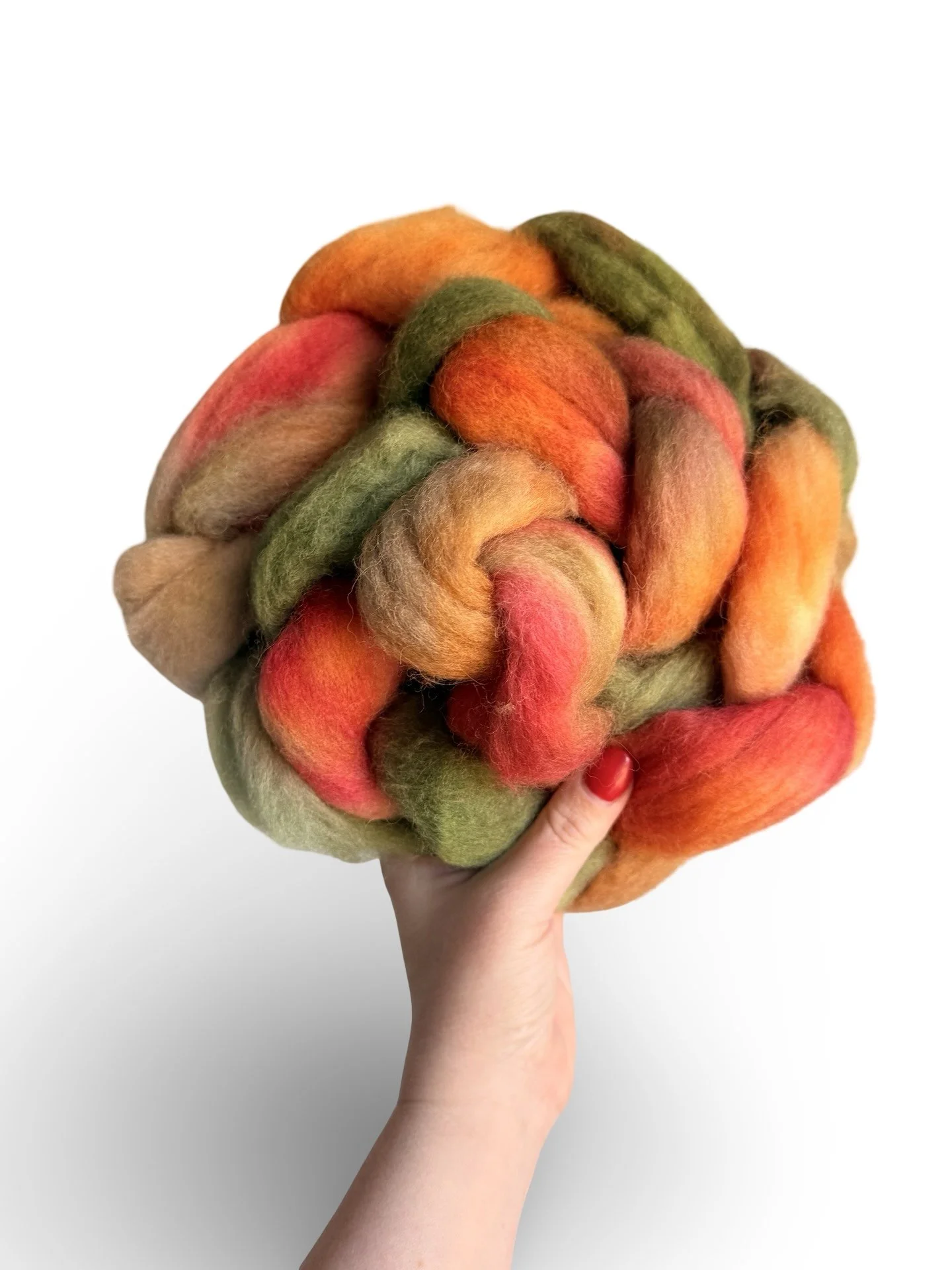
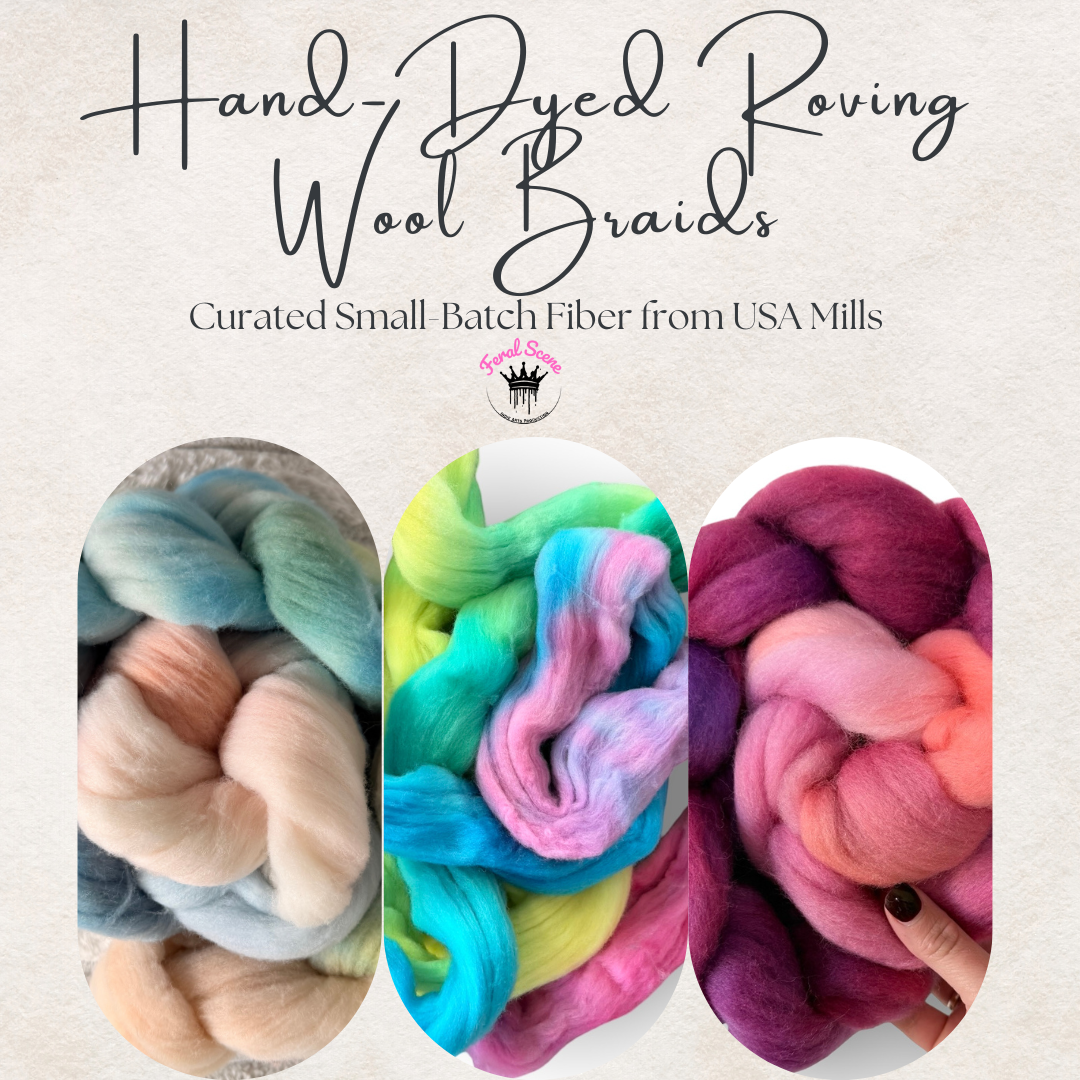
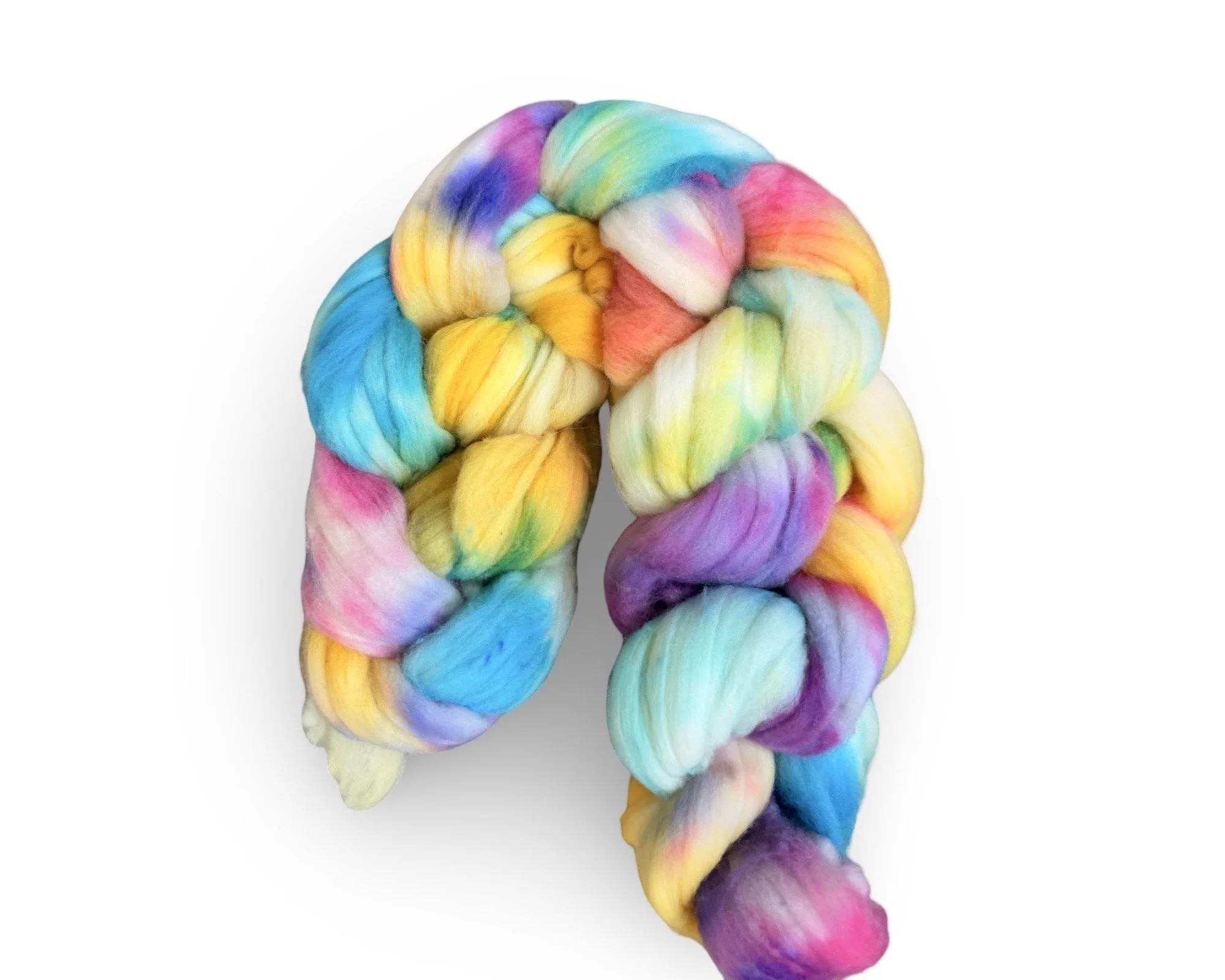
Limited Edition Wool Braids — Scarce Extras from Feral Scene
On occasion, even the most intentional of plans leaves behind a trace. These braids are the remnants of our subscription collections—rare extras, never guaranteed, and gone as quickly as they arrive.
A Study in Scarcity
Each braid begins in small American farms and mills, then passes through the hands of our dye team, who work in deliberate, atmospheric palettes. What remains here are not leftovers in the casual sense, but artifacts—echoes of a collection that cannot be repeated.
Continuity for the Dedicated
The surest way to secure every edition is to subscribe, but even then, no two months are the same. To commit is to step into rhythm with us—to receive fiber shaped by season, by mood, by intention. Flexibility is yours: pause or cancel at will.
Craft as Lineage
These braids are more than wool. They are a continuation of American textile heritage, kept alive in small mills and dye studios. To spin them is to work with history—reframed, but never lost.
For Makers Who See Beyond Material
This is fiber with intention—crafted in small batches for spinners who value both tradition and artistry.
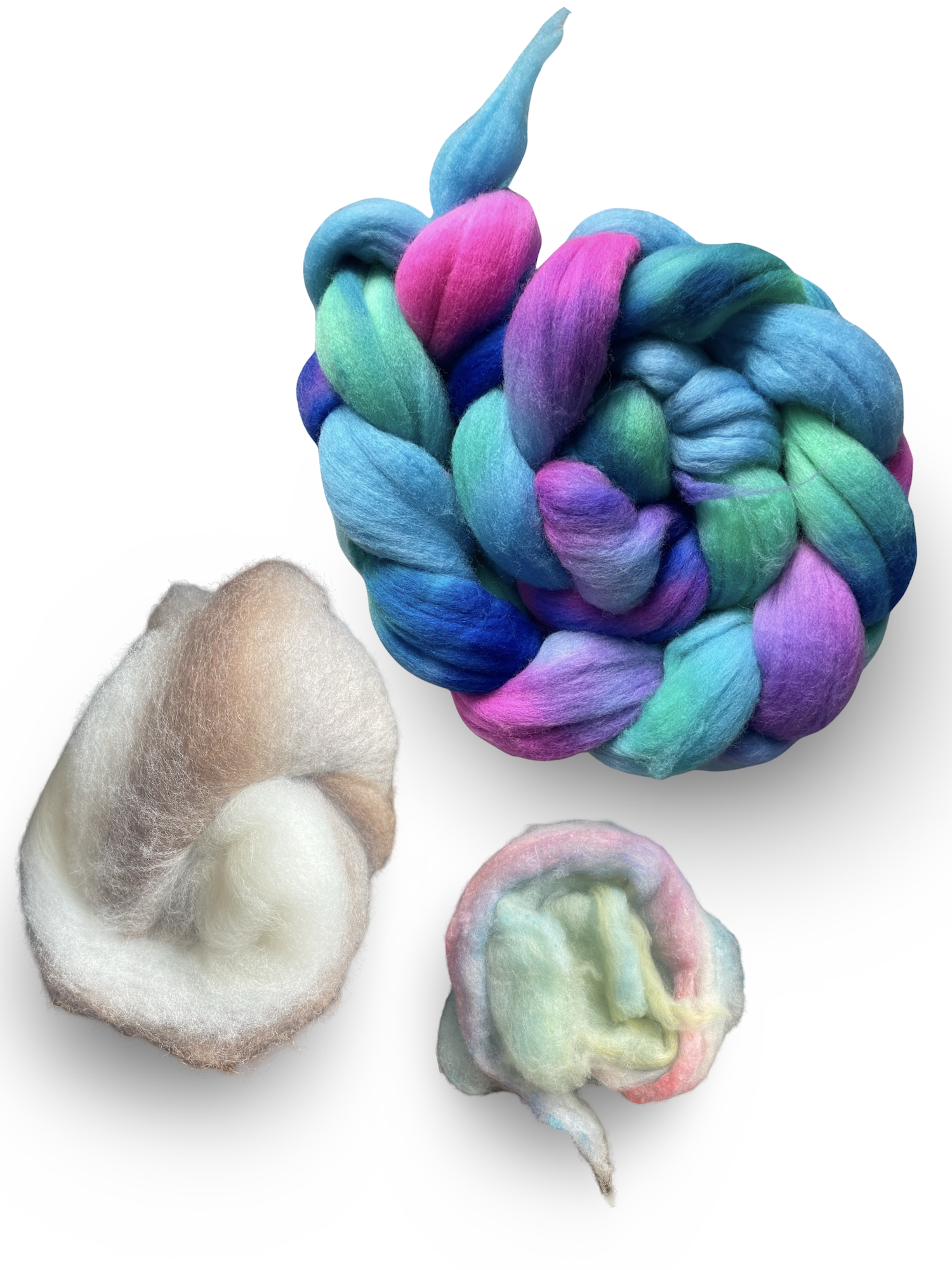
Our team of fiber artists and our small farm friends are thrilled to introduce the Monthly Spinning Fiber Subscription, crafted with an eye for design. This special package, which I originally created for personal friends and fellow fiber enthusiasts, is now available to you!
Here’s what you’ll receive each month:
4 oz Hand-Dyed Braid: Hand-dyed by our talented dye team, featuring our classic soft merino/rambouillet blend from a historic mill in the USA.
2 oz Mixed Fiber Batt: Made from unique and natural fibers, including selections from small USA farms like those in our Natural Beauty Bundle.
1 oz Batt or Rolag: Created from luxury fibers, hand-dyed and blended by our skilled fiber artists.
Our most loved spinning fiber subscription. A little bit of everything!
Great for gifting.
Totaling 7 oz of premium spinning fiber, this subscription is designed to inspire your creativity every month.
The spinning fiber subscriptions will be sent out around mid-month, ensuring you have a regular supply of beautiful fibers to work with.
Join our community and elevate your spinning projects with our hand-picked, high-quality fibers!